Why Kids Are Obsessed With Dinosaurs (and How to Use It)
Many parents have lived it: a three-year-old who can pronounce “Parasaurolophus” perfectly, a seven-year-old who corrects the museum guide, a bedroom filled with plastic Triceratops. Dinosaur obsession is one of the most common and most joyful phases of childhood, and it is also a wonderful learning opportunity.
This article explores why dinosaurs capture young imaginations and gives practical ways to turn that enthusiasm into reading, science, maths and creativity.
Why dinosaurs fascinate children
They are big, and children are small
Dinosaurs let children think about size and power from a safe distance. A child who spends most of their day being told what to do can feel mighty when they know the name of the largest meat-eater in the room.
They are scary, but safely extinct
Fear and excitement often go together. Dinosaurs offer a thrilling “what if” without real danger, and that makes them an ideal topic for exploring bravery.
They come with a great vocabulary
Words such as herbivore, carnivore, fossil and extinct feel grown-up. Children enjoy mastering long, tricky names, and doing so builds memory, phonics skills and confidence.
They are a world to collect and categorise
Young children love sorting and expertise. With hundreds of dinosaur species, there is always another fact to learn, another favourite to claim.
They are real, yet mysterious
Scientists are still discovering new species and revising what they know. For a curious child, a subject where real discoveries are still happening feels thrilling.
Dinosaur facts that surprise kids (and parents)
These make excellent conversation starters. Check a children’s encyclopaedia or museum website to explore more:
- Stegosaurus and Tyrannosaurus rex never met. They lived roughly 80 million years apart, so T. rex lived closer in time to us than to Stegosaurus.
- Birds are living dinosaurs. Scientists classify birds as the surviving branch of the dinosaur family tree, so a robin on the fence is a distant cousin of Velociraptor.
- Pterosaurs and marine reptiles were not dinosaurs. Pteranodon flew and ichthyosaurs swam, but both belong to different groups.
- Many dinosaurs had feathers. Fossil discoveries show that some species had feathers, and our picture of them keeps changing.
- Not all dinosaurs were giants. Some were about the size of a chicken.
Turning dinosaur love into reading
Mix fact books and fiction
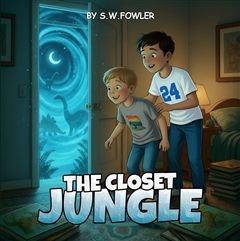
A child who devours dinosaur facts might also love a story set among dinosaurs. Non-fiction builds knowledge; fiction builds imagination and empathy. Offering both keeps the interest alive. Adventure stories where ordinary children meet extraordinary creatures are especially popular. If your child likes that kind of tale, the The Closet Jungle series follows two brothers who discover a hidden dinosaur world behind a bedroom closet.
Let them be the expert
Ask your child to teach you. “Tell me about the dinosaur on this page” builds speaking and explaining skills, and it makes a reluctant reader feel proud. This also works well for children who find reading difficult; they can show their knowledge through pictures and talk first.
Use dinosaur books to cross into chapter books
A subject your child adores can carry them through longer texts that might otherwise feel daunting. If you are making that move, our parent’s guide to chapter books explains how to choose and pace the books.
Dinosaur activities that teach
Science
- Fossil dig: Bury toy bones in a tub of sand or soil and let your child excavate with a brush.
- Make fossil prints: Press toy dinosaur feet into playdough or clay.
- Visit a museum or natural history collection and let your child lead the visit with their own question list.
Maths
- Measure out the length of a dinosaur in the garden or hallway using string and compare it to your house, a bus or a car.
- Sort toy dinosaurs by size, diet or era, and make a simple bar chart.
- Practise counting and adding with dinosaur eggs or footprints.
Writing and art
- Invent a new dinosaur: name it, draw it, and write three sentences about what it eats and where it lives.
- Write a postcard from the Jurassic period.
- Create a dinosaur fact file with a drawing and a “did you know?” line.
Imaginative play
- Build a cardboard-box jungle and act out an expedition.
- Play “what would you do?” games: what if a baby dinosaur appeared in your kitchen?
The last question works as a story prompt, too. Children who love imagining will happily write or tell a tale of their own; for story-building ideas, try the hands-on prompts on our Free Activities page.
Using dinosaurs to talk about feelings
Dinosaur stories offer a gentle way to discuss emotions. A huge dinosaur that is frightened, a small dinosaur trying to be brave, two siblings working together: these let children name and discuss feelings without feeling put on the spot. Ask questions such as:
- How do you think the dinosaur felt when it was lost?
- What helped the characters feel braver?
- What would you have done?
A simple “dinosaur week” plan
If you would like to turn the interest into a short project, try giving each day a small theme. On Monday, read a fact book together and let your child choose a favourite dinosaur. On Tuesday, measure that dinosaur’s length with string and compare it to your living room. On Wednesday, make a fossil print in playdough. On Thursday, write or tell a short story about that dinosaur meeting a child. On Friday, share what you learned with a grandparent, a friend or a soft toy audience. Each day takes ten to twenty minutes, uses things you already own and quietly practises reading, measuring, observing and storytelling.
Keeping the interest fresh
If a child’s enthusiasm seems to fade, that is natural; interests change. Keep a book basket, add new facts or a trip, and gently introduce related subjects such as geology, birds or the ocean. Today’s dinosaur fan may become tomorrow’s scientist, writer or museum guide.
Frequently asked questions
At what age do children get interested in dinosaurs?
Often between ages three and eight, but it varies. Some children are fascinated for years.
Are dinosaurs too scary for young children?
Most children enjoy them. Choose gentler books if your child is sensitive, and talk about the fact that dinosaurs are long extinct.
What are good dinosaur books for ages 6–10?
Look for a mixture of illustrated fact books, early chapter books and adventure fiction. Ask your librarian for current favourites.
How can dinosaurs help a reluctant reader?
A strong interest can motivate a child to attempt more difficult text. See our advice on helping a child who says reading is boring.
Are birds really dinosaurs?
Yes. Scientists classify birds as living members of the dinosaur lineage.