Teaching Siblings Teamwork Through Adventure Stories

If you have more than one child at home, you probably know that sibling relationships can be wonderfully unpredictable.
One moment, your children are building an elaborate fort together, negotiating who gets to be the captain, and making plans for an imaginary expedition. The next, there is a disagreement about whose idea was better, who moved the cushions, and why one particular person is apparently not following the rules.
And somehow, the entire adventure comes to a halt because nobody can agree on who gets to hold the flashlight.
Sound familiar?
Growing up with a sibling can be a little like living in your own adventure story. There are shared discoveries, inside jokes, unexpected disagreements, and plenty of opportunities to learn how to get along. Some days, siblings are each other's greatest allies. On other days, they need a little help remembering that being on the same team is usually more rewarding than trying to win every argument. This is one reason I love adventure stories featuring brothers and sisters. When characters face an unfamiliar world, encounter obstacles, or find themselves in situations they cannot manage alone, young readers get to see what cooperation looks like in action.
Rather than simply telling children to share, listen, or help one another, stories give them characters to observe and situations to think about. They can see what happens when someone refuses to cooperate, how a disagreement changes the outcome, and why two different strengths can become more powerful when they work together. So, how can parents use adventure stories to encourage stronger sibling bonds? And how can the lessons children encounter on the page find their way into everyday family life?
Let's explore.
1. Show Children That Being Different Can Be a Strength
One of the most interesting things about siblings is that they can share a home, a family, and many experiences while seeing the world in completely different ways.
One child might be adventurous and eager to try anything new. Another might prefer to observe carefully before making a decision. One may be brilliant at coming up with ideas, while the other is better at noticing details that everyone else has missed. These differences can sometimes lead to disagreements. They can also make siblings an excellent team.
Adventure stories often place characters in situations where they must combine their strengths to overcome a challenge. A character who acts quickly might help the group escape danger, while a more cautious character might notice a clue that prevents them from making a mistake.
Neither approach is automatically better. What matters is learning when each strength is useful.
This is a valuable message for siblings because children can easily fall into the habit of comparing themselves with one another. They may notice who runs faster, reads more confidently, builds the tallest tower, or gets praised most often. Stories can help shift the conversation from competition to contribution. Instead of asking which character is the cleverest, ask your children what each character brings to the adventure. You can then connect those observations to your children's everyday experiences. Perhaps one sibling is good at planning a game, while another makes sure everyone gets a turn. Perhaps one is imaginative, while the other is particularly patient. The aim is not to assign permanent roles or label children according to their personalities. It is to help them recognize that there are many ways to contribute to a shared goal.
A team becomes stronger when its members learn to appreciate what each person brings.
2. Use Adventure Stories to Make Teamwork Concrete
"Work together" sounds like a simple instruction, but children may not always understand what it looks like in practice. Healthy teamwork involves listening, contributing, making decisions together, and recognizing when another person needs support. It also involves being able to disagree without deliberately hurting or dismissing someone.
Adventure stories can make these ideas easier to understand because characters often face challenges that require practical cooperation.
Imagine two young explorers trying to cross a fictional jungle. One notices that the ground ahead looks unstable, while the other spots a safer route around it. They must share information, listen to one another, and decide how to proceed. Or imagine a pair of characters searching for a missing object. One remembers where they last saw it, while the other works out how to retrace their steps.
In both situations, the characters succeed because they contribute different pieces of information.
This is a particularly useful way to discuss teamwork with younger children. Instead of giving them an abstract definition, show them what cooperation looks like within a story.
Then try a simple activity at home.
Give your children a shared challenge, such as building a tower from blocks, completing a puzzle, or creating a cardboard vehicle. Explain that the goal is to finish the project together rather than to see who can do the most. Encourage them to discuss their ideas, divide tasks fairly, and ask one another for help. If disagreements arise, resist the temptation to solve every problem immediately. Give them a chance to work through the situation with your guidance.
Afterward, ask what helped them cooperate and what they might try differently next time. They may not produce a perfect tower, but they will have had an opportunity to practice the skills that make teamwork possible.
3. Let Characters Demonstrate the Importance of Trust
Trust is an essential part of any strong relationship. For siblings, it can mean believing that the other person will listen, keep a reasonable promise, or offer help when something goes wrong. Of course, trust does not develop automatically simply because two children are related. It grows through everyday experiences, including the way siblings treat one another during disagreements and shared activities.
Adventure stories can help children explore what trust looks like.
When characters enter an unfamiliar environment, they often have to rely on one another. They may need to follow a plan, share important information, or trust another character's judgment. Sometimes that trust is rewarded. Sometimes a character makes a mistake, and the group must find a way to recover. These situations create opportunities to discuss the difference between trusting someone blindly and learning to cooperate thoughtfully.
Stories can introduce these ideas in a way that feels less personal than discussing a recent family disagreement directly. And sometimes, a conversation about fictional characters gives children the language they need to understand something happening in their own lives.
4. Teach Children How to Handle Conflict Without Turning It Into a Competition
Sibling disagreements are normal. Two children may want the same toy, disagree about the rules of a game, or have completely different ideas about what to do next.
The goal is not to eliminate every disagreement. It is to help children develop healthier ways to resolve them. Adventure stories can be useful here because conflicts often have consequences. A character who refuses to listen may miss an important clue. A group that argues instead of communicating may lose valuable time. A character who admits a mistake may help everyone move forward. These examples allow children to see how behavior affects outcomes.
While reading, ask what each character could have done differently. Encourage your children to consider the feelings and needs of everyone involved rather than focusing only on who was right. For example, if two siblings want to lead an imaginary expedition, they might take turns being the leader, assign different responsibilities, or agree on a shared plan. Not every situation will have a perfectly equal solution, and parents may need to step in when there is a significant imbalance, persistent hostility, or a safety concern.
But when children have an opportunity to work through manageable disagreements, they begin developing skills that support stronger relationships. And if an argument about who gets to be the dinosaur expert ends with both children agreeing to research different dinosaurs, that is a rather excellent outcome.
5. Choose Stories That Reflect the Relationship You Want to Encourage
Not every adventure story will focus on sibling relationships, and that is perfectly fine. Children can learn about cooperation through friendships, groups of explorers, animal characters, and many other kinds of stories. However, books featuring siblings can provide a particularly direct opportunity to discuss the experiences children share at home.
Look for stories in which characters have different personalities, make mistakes, disagree, and learn to work through challenges. It can be helpful to see relationships presented as something that develops rather than something that is always effortless. Perfect characters are not necessarily the most relatable ones. Children may connect more deeply with a character who struggles to listen, becomes frustrated, or needs to learn how to cooperate than with one who always behaves correctly.
The important part is how the story handles those difficulties.
When choosing a book, consider your children's ages, interests, and reading abilities, too. A story that is too difficult to follow may distract from the themes you hope to explore, while an engaging adventure can make the conversation feel natural. This is another reason imaginative stories can be so useful. Children do not have to feel that someone has handed them a book specifically to correct their behavior.
They can enjoy the adventure first and discover its deeper ideas along the way.
6. Remember That Siblings Do Not Have to Be Best Friends Every Minute
It is lovely when siblings enjoy spending time together, but it is important not to place unrealistic expectations on their relationship.
Children can love one another and still need time apart. They may have different interests, different friendship groups, and different ideas about how to spend their free time.
Teamwork does not mean they must always play together or agree on everything. In fact, respecting each other's boundaries is an important part of a healthy sibling relationship. Adventure stories can help illustrate this, too. Characters may have different responsibilities, need time to think independently, or contribute in separate ways before coming together to solve a larger problem. At home, this might mean allowing one child to read quietly while another plays, or helping siblings negotiate when they want different activities.
It also means avoiding comparisons that make one child responsible for the other's happiness or behavior.
Instead of insisting that siblings always share, consider when sharing is appropriate and when each child should have some personal space. Rather than expecting the older child to manage every disagreement, help both children learn age-appropriate ways to communicate and cooperate. Strong relationships leave room for individuality. The aim is not to make siblings inseparable. It is to help them develop the trust and skills that allow them to support one another while growing into their own people.
Growing Together, One Adventure at a Time
Sibling relationships are built through countless small moments: a shared joke, a disagreement that gets resolved, a project completed together, or a time when one child offers help without being asked.
Adventure stories give children a way to explore these experiences from a different perspective.
They show that cooperation can be more effective than competition, that different strengths can complement one another, and that disagreements do not have to end a relationship. They also remind us that teamwork involves listening, trust, patience, and a willingness to consider someone else's point of view. These lessons are not always learned in a single reading session. Children need opportunities to practice them, make mistakes, and try again.
As parents, we can support that process by choosing engaging stories, asking thoughtful questions, and creating shared activities that allow siblings to work toward a common goal.
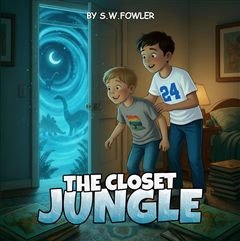
That is part of what makes The Closet Jungle such a meaningful adventure to share. Reid and Josh's journey into a prehistoric world places two brothers in an unfamiliar setting filled with surprises and challenges. Their story invites young readers to imagine what it might take to face the unknown alongside someone who knows them well. The world may be full of extraordinary creatures, but the relationships between the characters are part of what makes an adventure memorable.
And perhaps that is a useful reminder for siblings, too.
You do not have to think alike, enjoy all the same things, or agree on every decision to be a good team. You simply need opportunities to learn how to listen, contribute, and support one another. So, the next time your children embark on an imaginary expedition, resist the urge to solve every disagreement for them. Give them a little room to plan, negotiate, and discover what they can accomplish together. They may argue about the map. They may disagree about which dinosaur should lead the expedition. Someone will almost certainly attempt to change the rules halfway through, but somewhere in that wonderfully imperfect process, they may learn something important about being on the same team.
And if the adventure eventually ends with two siblings proudly presenting a cardboard prehistoric jungle they built together, celebrate the achievement. Not because the jungle is perfect, but because they created it together.
Ready for a prehistoric adventure? Join Reid and Josh in The Closet Jungle by S.W. Fowler, where two brothers discover a world of dinosaurs, surprises, and unexpected challenges. Share the adventure with your young readers and discover where imagination can take them.
Keep reading: Sibling teamwork games · How storybooks help children understand feelings · Animal or human characters in children’s books
Frequently asked questions
How can adventure stories help siblings get along?
Stories show characters with different strengths solving problems together, so children can see what listening, trust and cooperation look like and talk about it without it feeling personal.
Should I step in when my children argue?
Let them work through manageable disagreements first. Step in when there is a significant imbalance, persistent hostility or a safety concern.
Do siblings have to be best friends?
No. Children can love each other and still need time apart. Teamwork means respecting each other’s space and learning to listen and contribute, not agreeing on everything.

S.W. Fowler
Samantha Wiley Fowler (S.W. Fowler) is a mom, storyteller and the children's author of The Closet Jungle, a dinosaur adventure that began as bedtime stories for her own kids. Her tales kept them begging for "just one more chapter," and now she helps parents and teachers raise kids who love to read. Find The Closet Jungle on Amazon and Barnes & Noble.
Related posts

How Storybooks Help Children Understand Feelings
Stories give children a safe place to practice feeling, naming and understanding emotions. Here is how to make the most of it, with questio…
Read more about How Storybooks Help Children Understand Feelings