How Storybooks Help Children Understand Feelings
Ask a four-year-old how they feel and you may get “fine,” “good,” or a shrug. Ask them how the bear in the story feels when his friend leaves, and suddenly they have plenty to say. That difference is the secret of why storybooks are such a powerful tool for helping children understand emotions.
This article explains how stories build what is often called emotional intelligence, meaning the ability to notice, name and manage feelings, and to understand other people’s. It also gives practical questions, age by age, so you can use any book you already own.
Why stories work so well
Feelings at a safe distance
Talking about their own feelings can be hard and a little scary for a child. A character is easier. When a rabbit is frightened of the dark or a boy is left out at recess, children can explore the feeling without having to say “that’s me.” They often show you what they mean by choosing which character they say they are like.
A bigger feelings vocabulary
Many children only have a few words for emotions: happy, sad, mad. Books introduce more: nervous, jealous, proud, disappointed, embarrassed, left out, determined. Hearing those words used at the right moment, in a story the child cares about, is how they become part of everyday language.
Seeing other points of view
Young children naturally see the world from their own position. Stories gently stretch this. A child hears what a character is thinking, sees pictures of their face and discovers that two people can feel very differently about the same event. That is the foundation of empathy.
Examples of coping
Characters in good books do not just have big feelings; they work through them. They take a deep breath, ask for help, try again or say sorry. Children absorb these examples without being lectured.
Shared experience
Reading together adds something extra. A parent’s calm voice and presence tell the child that big feelings are normal and can be talked about. The conversation after a story often matters as much as the story itself.
The skills children build
How to do it: three simple moments
Before you read
While you read
Pause at emotional moments, not on every page. Two or three pauses are plenty.
After you read
Questions by age
Ages 1 to 3
Keep it short and visual. Point to faces and name the feeling: “Happy!” “Oh, he is sad.” Copy the expression yourself. Little ones learn emotion words by seeing them on faces and hearing them in your voice.
Ages 3 to 5
Ask “how does she feel?” and “why?” Link the story to your child’s day: “You felt like that at the playground, didn’t you?” This is a good age for stories about sharing, waiting and being afraid.
Ages 6 to 8
Children can now talk about mixed feelings (“he was excited and scared”) and about what a character should do. Ask for opinions, and accept answers you disagree with, as long as your child can explain the thinking.
Ages 9 to 12
Older children enjoy discussing motives, fairness and consequences. A chapter book is a good vehicle. Ask what the character could have done differently and how others in the story were affected.
Stories and siblings
Stories are particularly helpful for brothers and sisters. After a squabble, a story about two characters who disagree can open a conversation without blame. Ask each child to say how a character felt, then how the other character might have felt. You can then gently connect it back: “What do you think your sister was feeling when that happened?”
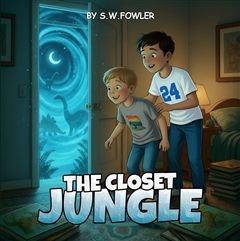
Adventure stories about siblings working together can show teamwork in action. In S.W. Fowler’s book The Closet Jungle, for example, two brothers face a world of dinosaurs and have to rely on each other. You can read more on the Behind the Book page. Any story with a pair of siblings can be used the same way.
A short example
Imagine you are reading a story about a girl whose block tower keeps falling. She stomps her foot, then sits down and breathes slowly, then tries again. You pause and say, “She looks frustrated. What did she do to feel calmer?” Your child answers, “She sat down.” Later that week, when your child’s own tower falls, you can quietly say, “Do you want to sit down like the girl in the book?” The story has become a shared tool, and nobody had to give a speech.
Mistakes to avoid
Choosing books that help
For ways to read aloud so that children stay engaged, see our guide to building a bedtime reading habit.
Frequently asked questions
At what age can I start talking about feelings in stories?
From the first picture books. Even a baby responds to faces and tone of voice. Naming feelings simply and warmly is enough.
My child never answers my questions. Is it working?
Probably. Listening and absorbing come before talking. Keep your questions light and few, and model answering yourself: “I think she is nervous.”
Are stories a substitute for talking about real feelings?
No. They are a bridge. The aim is to help children bring those words and ideas into real life, so link the story to your child’s day when it feels natural.
What if my child is very sensitive to sad stories?
Choose gentler books, read in the daytime, stay close and stop when needed. A story can always be put down and picked up another day.
Can this help with behavior problems?
It can support emotional skills, but it is not a treatment. If you are worried about your child’s behavior or wellbeing, please talk to a teacher or a qualified professional.