How to Explain Dinosaur Extinction to Kids, Age by Age
Quick answer
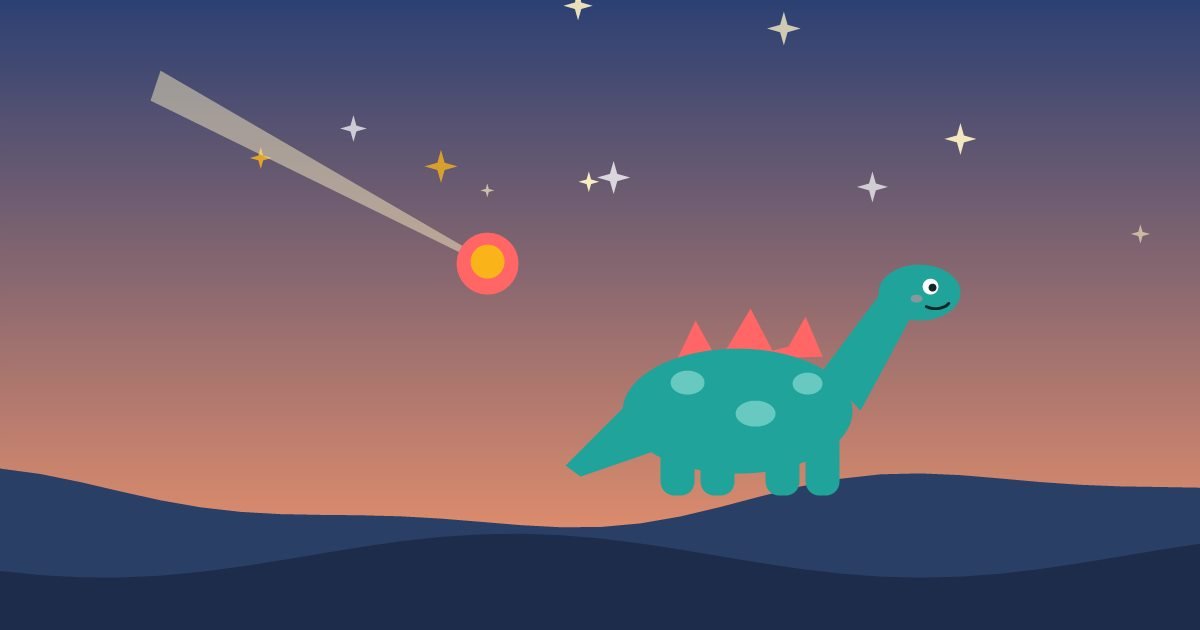
Tell kids the honest, simple version: about 66 million years ago, a giant space rock called an asteroid crashed into Earth. It filled the sky with dust, the weather turned cold and dark, plants stopped growing, and most dinosaurs couldn't find food. Then add the good news: some dinosaurs survived and became birds, so dinosaurs are still with us today.
Why kids ask "What happened to the dinosaurs?"
Sooner or later, every dinosaur-loving child asks the big question. It usually comes after a museum trip, a book or a long afternoon of dinosaur play. It's a wonderful moment, because it's often a child's first step into real science: asking how we know about things nobody ever saw.
It can also be a tender moment. Children who love dinosaurs may feel sad or even worried when they learn the dinosaurs died. The goal is to be honest and accurate, at a level your child can understand, while helping them feel safe and curious rather than scared.
The science, simplified for grown-ups
Here's what scientists understand, so you can answer follow-up questions confidently: (sources: the Smithsonian National Museum of Natural History and NASA)
- Dinosaurs lived on Earth for roughly 165 million years.
- About 66 million years ago, an asteroid around 10 kilometers (6 miles) wide hit Earth near what is now Mexico's Yucatán Peninsula. Its crater, called Chicxulub, is about 180 kilometers (110 miles) across.
- The impact threw huge amounts of dust and soot into the sky, blocking sunlight. Temperatures dropped and many plants died, which broke the food chain.
- Massive volcanic eruptions in what is now India were also changing the climate around that time.
- About three-quarters of all plant and animal species died out, including all dinosaurs except the ancestors of birds.
- Survivors included small mammals, birds, crocodiles, turtles, frogs and insects.
How to explain it, age by age
Ages 3–4: keep it short and gentle
Preschoolers need one or two simple sentences, not a disaster story.
Try: "A long, long time ago, before any people, a big rock from space hit the Earth. It made the world very cold and dark, and the dinosaurs couldn't find food. But some little dinosaurs survived, and they turned into birds!"
Then move on to something fun, like spotting birds outside. Preschoolers often don't grasp "long ago," so it helps to say "way, way before Grandma was born, before any people at all."
Ages 5–7: add cause and effect
Early elementary children love understanding how one thing leads to another. Walk them through the chain:
- A giant asteroid hit Earth.
- Dust filled the sky and blocked the sun.
- Without sunlight, plants couldn't grow.
- Plant-eating dinosaurs didn't have enough food.
- Meat-eating dinosaurs lost their food too.
A quick demonstration helps. Shine a flashlight on a toy plant, then cover the light with a cloth: "This is what the dust did to the sun." You can also explain that this is how scientists know: they found the crater, a special layer of rock all over the world from that time, and fossils that suddenly stop.
Ages 8–10: explore the evidence
Older kids are ready to think like scientists. Talk about how scientists found a thin layer of rock rich in iridium, a metal that is rare on Earth but common in asteroids, in rocks from that time around the world. Explain that the crater was found buried under Mexico. Mention that volcanoes may also have played a part, and that scientists still discuss exactly how much each mattered.
This is a great age to introduce a powerful idea: science is about evidence, and good scientists keep asking questions.
When your child feels sad or scared
Some children worry: "Could an asteroid hit us?" Answer calmly and truthfully. Asteroids that big are extremely rare, and one like the dinosaur asteroid hasn't hit Earth in 66 million years. Scientists also watch the sky every night to track space rocks. In 2022, NASA even tested crashing a spacecraft into a small asteroid to nudge it off course, and it worked.
If your child feels sad that dinosaurs are gone, validate it: "It is a little sad. You love dinosaurs so much." Then share the hopeful part: birds are living dinosaurs. The sparrow at your window is a distant cousin of T. rex. Many kids find this amazing and comforting.
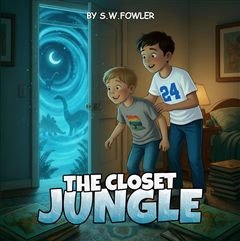
Stories can help too. Books let children spend time with dinosaurs as living, caring characters. In The Closet Jungle, brothers Reid and Josh step into a world where dinosaurs are alive, and they help care for baby dinosaurs. A story like that lets a child enjoy dinosaurs without the sadness. Our read-aloud tips can make that story time even richer.
Hands-on activities to explore extinction
- Crater experiment: Fill a tray with flour, sprinkle cocoa powder on top, and drop marbles or small balls from different heights. Measure the craters.
- Food chain game: Draw the sun, plants, plant-eaters and meat-eaters on cards. Remove the sun card and talk about what happens to the rest.
- Bird watch: Spend 10 minutes spotting birds and comparing their feet to dinosaur footprints.
- Fossil dig: Bury toy bones in sand and dig them up like a paleontologist. Find more ideas in our dinosaur activities for preschoolers.
Common questions kids ask (and simple answers)
- "Did people see the dinosaurs?" No. Dinosaurs died out about 66 million years before the first people.
- "Did all the dinosaurs die at once?" Most died out over a short time after the asteroid, but not in a single day. Some survived and became birds.
- "Could dinosaurs come back?" Not real ones. Dinosaur DNA is far too old to survive, but we can enjoy them in fossils, museums and stories.
- "Why did crocodiles survive?" Smaller animals that could eat many kinds of food and go a long time without eating had a better chance.
For more on why children are so drawn to these creatures, read why kids love dinosaurs.
Frequently asked questions
How do you explain dinosaur extinction to a 4-year-old?
Keep it to two sentences: a big space rock made the world cold and dark, and the dinosaurs couldn't find food. Add that some survived and became birds.
What killed the dinosaurs?
An asteroid impact about 66 million years ago is the main cause, with large volcanic eruptions also affecting the climate at the time.
Are birds really dinosaurs?
Yes. Birds descended from small feathered dinosaurs, so scientists consider them living dinosaurs.
How long ago did dinosaurs go extinct?
About 66 million years ago, after living on Earth for roughly 165 million years.
Should I tell my child the truth about extinction?
Yes, at a level that fits their age. Honest, simple answers build trust and curiosity, especially when paired with the hopeful fact that birds are dinosaurs.

S.W. Fowler
Samantha Wiley Fowler (S.W. Fowler) is a mom, storyteller and the children's author of The Closet Jungle, a dinosaur adventure that began as bedtime stories for her own kids. Her tales kept them begging for "just one more chapter," and now she helps parents and teachers raise kids who love to read. Find The Closet Jungle on Amazon and Barnes & Noble.
Related posts
How Dinosaur Books Help Children Learn Science and Stay Curious
Dinosaur books turn a child’s endless questions into scientific thinking. Here is how to use that curiosity at home.
Read more about How Dinosaur Books Help Children Learn Science and Stay Curious
Why Kids Are Obsessed With Dinosaurs (and How to Use It)
From “Tyrannosaurus” to “herbivore”, dinosaurs make children want to read, ask questions and learn. Here is why they fascinate kids and how…
Read more about Why Kids Are Obsessed With Dinosaurs (and How to Use It)