My Child Is Scared of the Closet at Night

Quick answer
It's normal for children aged about 2 to 7 to fear the closet at night. Their imagination is growing faster than their ability to tell pretend from real. The best fixes are calm and consistent: take the fear seriously, check the closet together once, close it as part of the routine, add a dim nightlight, and give your child a small sense of control at bedtime.
Why kids fear the closet at night
If your child suddenly refuses to sleep until the closet door is shut, you're not alone. Nighttime fears are one of the most common bedtime challenges parents face, and the closet is the classic hiding spot in a child's mind.
There are three main reasons. First, imagination develops quickly between ages 2 and 7. Children can picture monsters vividly but can't yet reason them away. Second, darkness changes familiar things. A jacket on a hook becomes a shape, and a creaking floor becomes footsteps. Third, bedtime is a separation. Your child is alone, still, and the busy day has gone quiet, so worries have room to grow.
Fears can also spike after a change: a new sibling, a move, starting school, or a scary scene from a show. The closet simply becomes the place those feelings land.
What not to say
Well-meaning phrases can backfire. "There's nothing there, go to sleep" tells your child their feeling is wrong, so they stop telling you about it. Teasing, even gently, can make a child feel embarrassed on top of scared. And long, dramatic monster hunts can accidentally confirm that something might be in there.
Instead, try: "I can see you feel scared. Let's figure this out together." Naming the feeling calms the body before you solve the problem.
9 gentle fixes that work
1. Do one calm closet check, together
Open the closet with your child, turn on the light, and look at what's actually inside. Let your child touch the clothes and boxes. Keep it short and matter-of-fact. One check per night is enough. Repeated checks teach the brain the danger is real.
2. Close the closet as part of the routine
Make "close the closet" a step in bedtime, like brushing teeth. When it happens every night, it stops being a reaction to fear and becomes a cozy ritual. Some children like to be the one who closes it.
3. Add a dim, warm nightlight
A soft amber or red nightlight reduces scary shadows without making it hard to fall asleep. Avoid bright white or blue light, which can keep little brains alert. Place it so it lights up the closet area gently.
4. Reduce shadow shapes
Sit on your child's bed at night and look around from their height. Move the robe hanging on the door, close drawers, and clear the chair piled with clothes. You'll often spot the "monster" in seconds.
5. Give your child a job
Control is the opposite of fear. Let your child choose which stuffed animal "guards" the closet, or pick the nightlight color. For preschoolers, a spray bottle of water labeled "brave spray" can help. Use it as a confidence ritual rather than proof that monsters exist: "This is for feeling brave."
6. Read stories where fear turns into courage
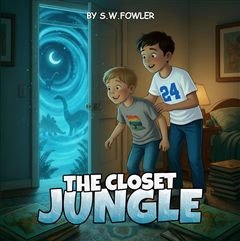
Books are one of the best tools for nighttime fears. Stories let children see a character feel scared, face something unknown, and come out braver. In our book The Closet Jungle, a closet door leads brothers Reid and Josh into a world of dinosaurs. It's a reminder that what's behind a door can be wonder, not danger. A calm read-aloud also signals the end of the day. See our guide to making bedtime reading a habit kids love and read-aloud tips that keep kids listening.
7. Turn the closet into a friendly place by day
Fear shrinks with good experiences. During the day, build a reading nook in the closet, hide a treasure for your child to find, or play a quick dinosaur game near it. Our dinosaur activities for preschoolers include ideas you can set up in a bedroom.
8. Teach one calming skill
Give your child something to do when fear shows up. "Balloon breathing" works well: breathe in slowly through the nose like filling a balloon, then out slowly through the mouth. Three slow breaths. Practice it during the day so it's ready at night.
9. Check in, then step out
If your child calls for you, return briefly and calmly: a quick hug, a reminder of their brave spray or breathing, then leave. Stretch the time between check-ins over several nights. This builds confidence that they're safe without you in the room.
A simple bedtime routine for scared kids
Predictability is calming. Here's a 25-minute routine you can adapt:
- Bath or wash-up and pajamas (10 minutes)
- Close the closet together and switch on the nightlight (1 minute)
- Read one or two calm stories (10 minutes)
- Three balloon breaths and a goodnight phrase you always use (2 minutes)
- Lights out, door the way your child likes it (2 minutes)
Keep the order the same every night. After one to two weeks, most children start to relax because they know exactly what comes next.
Fears by age: what's typical
- Ages 2–3: Fear of the dark and separation are common. Short, cuddly reassurance works best.
- Ages 4–6: Imagination peaks, so monsters, shadows and closets top the list. Give your child jobs and rituals.
- Ages 7–9: Fears shift toward realistic worries like burglars or storms. Talk through facts and safety plans.
When to talk to a professional
Most nighttime fears fade with time and a steady routine. Talk to your pediatrician if fears are intense and last for months, if your child can't sleep most nights, if fear spreads into the daytime, or if it began after a frightening event. Getting support early is a sign of good parenting, not failure. For more on children’s sleep and fears, see the American Academy of Pediatrics’ parenting site, HealthyChildren.org.
Frequently asked questions
At what age do kids get scared of the closet?
Closets and the dark commonly become scary between ages 2 and 7, peaking around ages 4–6, when imagination is strongest.
Should I leave the closet door open or closed?
Closed usually works best, since it removes the dark opening. Make closing it a nightly routine step your child can help with.
Is monster spray a good idea?
It can be, if you frame it as "brave spray" that helps your child feel confident, rather than proof monsters are real.
Should my child sleep in my bed when scared?
Occasional comfort is fine, but regular co-sleeping can make independent sleep harder. Brief check-ins usually work better long term.
How long does it take to help a child feel safe at night?
With a consistent routine, most families see improvement in one to three weeks.

S.W. Fowler
Samantha Wiley Fowler (S.W. Fowler) is a mom, storyteller and the children's author of The Closet Jungle, a dinosaur adventure that began as bedtime stories for her own kids. Her tales kept them begging for "just one more chapter," and now she helps parents and teachers raise kids who love to read. Find The Closet Jungle on Amazon and Barnes & Noble.
Related posts

10 Benefits of Bedtime Reading for Kids (in Just 15 Minutes)
A bedtime story is one of the smallest habits with some of the biggest rewards. Here are ten ways a short nightly read helps your child, an…
Read more about 10 Benefits of Bedtime Reading for Kids (in Just 15 Minutes)
How to Make Bedtime Reading a Habit Your Kids Love
A calm, realistic plan for turning bedtime stories into a nightly routine your children look forward to, even on chaotic evenings.
Read more about How to Make Bedtime Reading a Habit Your Kids Love