Free Activities and Printables
Here are simple, low-cost activities for dinosaur fans and story lovers, sorted by age. Nearly all of them use things you already have at home: paper, crayons, cardboard, blankets and a little imagination. Every activity is written for the adult to set up and supervise. No sign-up is needed, and you will never be asked for a child’s personal information.
How to use this page
Pick one activity, not five. Ten focused minutes of play usually beats an elaborate project that nobody finishes. Treat the age bands as a rough guide, since a six-year-old can happily enjoy a “toddler” sensory tub and a four-year-old can surprise you with a “big kid” challenge. Always supervise, and use age-appropriate materials: small parts, paint and sand need a close eye with the youngest.
Ages 1 to 3: touch, sound and stomping
- Dinosaur footprints. Press toy dinosaur feet into playdough and let your toddler find the matching footprint. Say the sizes aloud: big, small, giant, tiny.
- Stomp and roar. Play a simple freeze game: stomp like a big dinosaur, tiptoe like a small one, freeze when you say “fossil!”.
- Sensory dig tub. Hide plastic dinosaurs in a tub of dry oats or rice and let little hands hunt (supervise closely so nothing is eaten).
- A very short story. Read a picture book about a baby dinosaur, then let your child “feed” a soft toy baby dinosaur.
Ages 3 to 5: pretend play and early learning
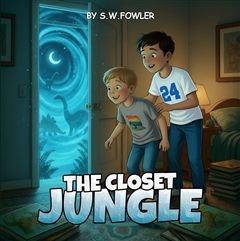
- Cardboard-box jungle. Turn a large box into a hidden-world doorway. Add paper leaves and a torch for a “glowing baby dinosaur” (see our book hub for the inspiration).
- Dinosaur sorting. Sort toy dinosaurs by size, colour or by plant-eater and meat-eater, and count how many are in each group.
- Egg hunt. Hide paper “eggs” around a room, and let your child help the baby dinosaurs find their way home.
- Feelings faces. Draw a baby dinosaur who is scared, happy or sleepy, and talk about what helps when we feel that way.
Ages 6 to 8: make, measure and write
- Measure a dinosaur. Use string to mark out the length of a favourite dinosaur in the garden or hallway, then compare it to a car or your house.
- Fossil dig. Bury toy bones or shells in a tub of sand or soil and excavate them with a paintbrush. Write a short “field note” about each find.
- Invent a dinosaur. Design a new species: where does it live, what does it eat, how does it protect its babies?
- Closet door story. Open a pretend door on a sheet of paper and write or draw what is behind it.
Ages 9 to 12: investigate and create
- Dinosaur detectives. Pick a dinosaur and find three facts from two reliable sources (a museum site and a book). Where do the sources agree, and where do they differ?
- Make a timeline. Roll out a long strip of paper and mark when different animals lived, so they can see that Stegosaurus and Tyrannosaurus lived millions of years apart.
- Comic page. Turn a favourite chapter into a four-panel comic.
- Reading log with a twist. Keep a simple log, and after each book add one question you would ask a character.
Printables
We are building a small collection of free printables: coloring pages, a simple reading log and discussion-question cards. They will be plain PDFs for personal and classroom use, with no email address required to download. Until then, every activity above works on a blank sheet of paper.
Turn play into reading
Activities work best when they sit alongside books. After a dig or a dinosaur hunt, share a book on the same topic, and let your child tell you what they remember. For ideas, read why kids love dinosaurs and how to use it and what to do when a child says reading is boring. Teachers can combine these activities with our classroom guide.
Share your ideas
Tried an activity and made it better? Tell us. With your permission we may mention good ideas in future posts. Please do not send photographs or personal details of children.