How to Read Aloud to Your Child: 10 Tips That Keep Them Listening

Quick answer
To read aloud well, choose books your child is excited about, read a little slower than feels natural, use different voices and expression, pause to let them predict and point, ask open questions, and stop before they lose interest. Aim for 15–20 minutes a day at a regular time, and keep reading aloud even after your child can read alone.
Why reading aloud matters so much
Reading aloud is one of the simplest and most powerful things you can do for your child. It builds vocabulary, since books use richer words than everyday conversation. It strengthens listening and attention, teaches how stories work, and connects reading with warmth and closeness.
Best of all, it's free and takes just a few minutes. You don't need to be a great performer. Children care much more about your attention than your acting skills.
10 read-aloud tips that keep kids listening
1. Let your child help choose
Kids listen best to books they picked. Offer two or three options, or let them choose every other night. Rereading the same book is fine. Repetition helps young children learn words and feel confident. If your child resists books in general, our guide when your child says reading is boring has ideas for finding the right fit.
2. Preview the book first
If it's a new book, skim it before story time. You'll know where the exciting parts are, which words might need explaining, and whether anything might be too scary at bedtime.
3. Slow down
Most adults read aloud too fast. Slow your pace so your child can picture the story and look at the illustrations. Slow down even more at suspenseful moments and speed up during action scenes.
4. Use your voice like an instrument
You don't need perfect character voices. Small changes work: a deep, slow voice for a dinosaur, a squeaky one for a mouse, a whisper for a secret. Get louder for excitement and quieter for calm or spooky parts. Children lean in when you whisper.
5. Pause for predictions
Before turning the page, ask: "What do you think will happen next?" Predicting keeps children actively thinking. There's no wrong answer. If their guess is wrong, that's part of the fun.
6. Ask open questions (but not too many)
Researchers call this "dialogic reading": turning story time into a conversation. Ask questions without one right answer:
- "How do you think she feels?"
- "What would you do?"
- "Why do you think he did that?"
Keep it light. One or two questions per book is plenty for young children. Too many interruptions break the story's spell.
7. Let them point, turn and join in
For toddlers, let them turn pages and point to pictures: "Where's the dinosaur?" For preschoolers, pause before a repeated phrase and let them finish it. Older kids can read the dialogue for one character while you read the rest.
8. Connect the story to their life
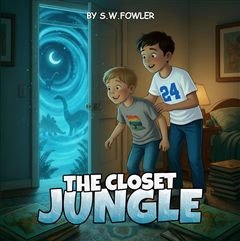
Link the book to real experiences: "Remember when we saw a big dog at the park?" These connections make stories meaningful and help children understand new ideas. If you read The Closet Jungle, ask: "What would you want to find behind your closet door?"
9. Stop while they're still enjoying it
Watch for wiggles and wandering eyes. It's better to stop at an exciting moment, so your child begs for more tomorrow, than to push through and make reading feel like a chore. With chapter books, stopping on a cliffhanger works wonders.
10. Make it a daily ritual
Consistency matters more than length. Pick a regular time, after dinner or at bedtime, and protect it. Our guide to making bedtime reading a habit kids love walks through building that routine step by step.
Read-aloud tips by age
- Babies (0–12 months): Read board books with high-contrast pictures. Your voice and closeness matter most. It's fine if they chew the book.
- Toddlers (1–3 years): Short books with rhymes, repetition and things to point at. Let them lead and expect lots of rereading.
- Preschoolers (3–5 years): Picture books with simple plots. Ask predictions and let them finish repeated lines.
- Early readers (5–8 years): Mix picture books with short chapter books. Read slightly above their own reading level to grow vocabulary. Our picture books to chapter books guide explains when and how to make that move.
- Older kids (8–12 years): Keep reading aloud. Choose longer novels you can enjoy together, and talk about characters' choices.
How long should you read aloud?
Around 15–20 minutes a day is a great target for most families. For toddlers, even 5–10 minutes counts. Several short sessions work just as well as one long one. Independent reading time is a separate goal. See how long a 7-year-old should read each day for guidance on that.
Common read-aloud mistakes to avoid
- Turning it into a test. Quizzing every page makes reading feel like school.
- Stopping too early. Many parents stop reading aloud once a child can read. Kids can understand stories far above their reading level, so listening keeps building vocabulary.
- Reading while distracted. Put the phone away. Your full attention is what makes story time special.
- Only reading at bedtime. Bedtime is great, but a morning or after-school book can work wonders for kids who are too tired at night.
Frequently asked questions
How do I get my child to sit still for a story?
Start with short, interactive books, let them hold a toy or move around, and stop before they lose interest. Attention grows with practice.
Should I keep reading aloud after my child can read?
Yes. Reading aloud to older children builds vocabulary and comprehension beyond their own reading level, and it remains a special shared time.
Is it OK to read the same book over and over?
Yes. Repetition helps young children learn new words, recognize patterns and feel confident.
What should I do if my child interrupts constantly?
Welcome some questions, since they show engagement. If interruptions take over, say, "Great question, let's talk about it at the end of this page."
What's the best time of day to read aloud?
Any time you can do it consistently. Bedtime is popular, but after school or weekend mornings work just as well.

S.W. Fowler
Samantha Wiley Fowler (S.W. Fowler) is a mom, storyteller and the children's author of The Closet Jungle, a dinosaur adventure that began as bedtime stories for her own kids. Her tales kept them begging for "just one more chapter," and now she helps parents and teachers raise kids who love to read. Find The Closet Jungle on Amazon and Barnes & Noble.
Related posts

5 Children’s Books Growing Young Minds
Five books that, in an author’s experience, do real work in a child’s mind: they validate feelings, build empathy and trust young readers w…
Read more about 5 Children’s Books Growing Young Minds
How to Help a Reluctant Reader Fall in Love With Books
A child who resists reading has not given up on stories. Here are six patient ways to make books feel inviting again.
Read more about How to Help a Reluctant Reader Fall in Love With Books
How to Choose the Right Books for Your Child’s Age and Reading Level
Age, reading level and interests all matter. Here is how to find the books your child will actually want to keep reading.
Read more about How to Choose the Right Books for Your Child’s Age and Reading Level