How to Make Bedtime Reading a Habit Your Kids Love
Ask a room full of parents what they would love to do more of, and “read with the kids at bedtime” comes up again and again. Ask what gets in the way, and the answers are just as familiar: tired children, late dinners, homework, screens, and a parent who is running on empty by seven o’clock.
The good news is that a bedtime reading habit does not need a perfect evening. It needs a small, repeatable routine that works on your worst nights as well as your best ones. This guide walks through how to build one step by step.
Why a routine beats good intentions
Habits form when an action is tied to something you already do and is easy enough to repeat daily. “We’ll read more this year” is a wish. “After pyjamas and teeth, we read one chapter in the big chair” is a routine. Children also find predictable sequences comforting. When the same steps happen in the same order, the body starts to wind down before the story even begins.
Shared reading has benefits beyond the book itself. It gives you unhurried time together, it exposes children to words they would not hear in everyday talk, and it quietly teaches that stories are something to look forward to rather than a school task.
Step 1: Anchor reading to something that already happens
Choose one existing bedtime step and attach the book to it. Good anchors include:
- Right after brushing teeth
- Once everyone is in bed with the main light off and a lamp on
- Straight after a bath, before the final goodnight
Pick the anchor that is most reliable in your house, not the one that sounds nicest. If baths are unpredictable but teeth always get brushed, anchor to teeth.
Step 2: Start smaller than you think
Ten minutes is plenty. If that feels like too much, start with five. The aim of week one is not to finish a book; it is to make the routine feel easy. A short session that happens every night is worth far more than an hour on a Sunday that happens once.
A simple rule of thumb: stop while your child still wants a little more. Ending on a high note makes tomorrow’s story something to look forward to.
Step 3: Set up the space
You do not need a dedicated reading nook, although a cosy corner can help. What matters more is removing friction:
- Keep the books where bedtime happens. A small stack on the bedside table beats a trip down the hall to the bookshelf.
- Dim the lights. A lamp or a small clip-on reading light signals that the day is winding down.
- Put devices out of reach. If a phone is in your hand, a child will notice. Try leaving it charging in another room for the length of the story.
Step 4: Let your child choose (within limits)
Choice is one of the strongest motivators for young readers. Offer two or three books and let your child pick. Allow re-reads, too. Hearing the same story ten times can feel tedious to an adult, but repetition helps children notice new details, predict what comes next and feel confident.
It also helps to mix formats across the week: a picture book on a tired night, a chapter from a longer adventure when there is energy, a funny poem for a rushed evening. If you are moving up to longer stories, our parent’s guide to chapter books explains how to make that shift gently.
Step 5: Bring the story to life
You do not have to be an actor. A few simple techniques make a big difference:
- Vary your pace. Slow down for suspense and speed up for action.
- Use different voices. Even a slightly deeper or squeakier tone helps children tell characters apart.
- Pause and wonder. Before turning a page, ask “What do you think will happen?” and give your child time to answer.
- Invite them in. Let your child read a repeating line, make the sound effect or turn the pages.
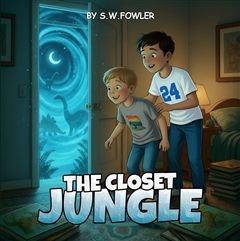
Adventure stories are especially good for this because there is so much to wonder about. A story about brothers who find a hidden jungle behind a closet door, for example, invites endless “what would you do?” questions.
Step 6: Plan for “just one more chapter”
Every parent meets this one. Children are not trying to be difficult; they are enjoying the story and dreading the end of a lovely evening. The trick is to decide the limit before you start.
Say it clearly at the beginning: “We’re reading two chapters tonight.” Some families use a small sand timer or agree on a number of pages. When the limit is reached, end with a cliffhanger question such as “I wonder what happens next?” and move on to the next step. A consistent boundary, kindly held, is easier than negotiating every night.
Step 7: Have a “minimum version” for hard nights
Illness, late arrivals and difficult days are inevitable. Decide in advance what the smallest acceptable version of your routine looks like. It might be one picture book, a single page, or a story told in the dark without any book at all. Keeping the chain unbroken, even in miniature, protects the habit.
Reading with more than one child
When siblings are different ages, try these approaches:
- Take turns choosing. Alternate whose pick comes first.
- Choose stories with layers. Books with humour and pictures for the little one and a real plot for the older one can work for both.
- Offer one-on-one time occasionally. A few minutes alone with each child, once a week, is precious.
- Let the older child read to the younger. It builds fluency for one and delight for the other.
Common problems and quick fixes
My child wriggles and will not sit still
Let them hold a small toy, lie down, or draw quietly while you read. Many children listen better with their hands busy.
I am too tired to read aloud
Try an audiobook for the first half and finish the last few pages yourself, or let your child “read” the pictures to you. Sharing the load keeps the routine alive.
My child gets over-excited by exciting stories
Save the most thrilling chapters for earlier in the day and choose gentler, rhythmic books for the last story before sleep.
Making it last
Keep a simple chart on the wall and tick off each night. Celebrate milestones such as finishing a first chapter book with a special activity, not necessarily a prize. Over time the books themselves become the reward. If you would like ideas for stories to try, you can explore The Closet Jungle on the author’s official website, an adventure series for readers around ages 6 to 10.
Frequently asked questions
What is the best age to start a bedtime reading routine?
Any age is a good time to start. Many families begin with babies, using board books and soft sounds. If you have an older child, begin now with short, enjoyable sessions.
How long should bedtime reading last?
Ten to twenty minutes suits most families, but the right length is the one you can keep up. See our guide on how long a 7-year-old should read each day for more detail.
Should I keep reading aloud once my child can read alone?
Yes, if they enjoy it. Children can usually understand more complex stories by listening than by reading themselves, so read-alouds let them enjoy richer plots and vocabulary.
What if my child refuses to read at bedtime?
Try a different time of day, offer a choice of books, or reduce the session to a few minutes. If reluctance continues, read what to do when your child says reading is boring.
Are audiobooks as good as reading aloud?
They are a wonderful supplement, particularly on tiring nights, but they do not replace the closeness of reading together. Use both.