5 Children’s Books Growing Young Minds
I’ve spent the better part of two decades staring at a blinking cursor or scribbling in the margins of picture book drafts, and if there is one thing I’ve learned about writing for children, it’s that we often underestimate their capacity for the heavy stuff. We tend to think of "growing young minds" as a process of adding, adding vocabulary, adding "morals," adding facts about photosynthesis. But real growth, the kind that sticks to your ribs, is usually about the quiet collisions a child has with a story that doesn't try to solve their problems for them.
Most people will tell you to look for books with bright colours and clear-cut lessons. I’m going to tell you the opposite. Look for the shadows. Look for the books that leave a bit of a mess behind.
When I’m sitting in my studio, usually with a lukewarm cup of coffee and a dog who thinks my keyboard is a pillow, I think about the books that actually changed me. It wasn't the ones that taught me how to share; it was the ones that acknowledged how hard it is to be a person. If you're serious about the books you put in front of a child, or if you’re trying to write one yourself, you have to stop treating "childhood" as a destination and start treating it as a complex, often confusing, state of being.
Here are five books that, in my lived experience as an author and a reader, actually do the work.
1. Where the Wild Things Are by Maurice Sendak
I know, I know. It’s the "obvious" choice. It’s the book every "Top 10" list includes because it’s safe and canonized but stay with me for a second. Most people praise Where the Wild Things Are for its imagination or its dreamlike illustrations, but that’s a surface-level reading. It’s the kind of thing people say when they haven’t actually looked at Max’s face in thirty years.
The reason this book grows a mind is because it validates rage.
Max isn't just "misunderstood." He is furious. He’s being a "Wild Thing," chasing the dog with a fork, threatening his mother, real, messy, childhood hostility. And here is where Sendak does something brave: instead of the book ending with a lecture on why we don’t scream at the people who feed us, he lets Max have his anger. He doesn't apologize for it, and he doesn't fix it. He lets Max sail away to a place where he is the king of that anger, where he can "rumpus" until he’s exhausted.
There’s a certain kind of "expert" advice out there, the kind that populates modern parenting blogs, that says children’s media should strictly model perfect behaviour. I think that’s rubbish. It’s actually a little dangerous. If we only show kids "perfect" versions of themselves, we leave them alone in their darkness. We tell them that their natural, surging emotions are "bad" or "wrong" rather than just human.
When Max finally decides to go home because he smells "good things to eat," it isn't because he’s learned his lesson or because he’s afraid of being grounded. It’s a choice made out of a primal need for connection, not a submission to authority. He chooses love over being right. That is a massive distinction for a developing brain to chew on, the idea that you can be furious, be a monster, and still be worthy of a hot supper.
2. The Arrival by Shaun Tan
This is a silent comic book, which may seem to be cheating on my list of books, but this is probably the most complicated story that I've ever heard. This is the story of an immigrant who left his family in search of employment in a bizarre and surreal world. In this world, birds appear like pieces of stone, buildings fly, and food does not exist at all.
What makes this significant for a developing mind? It is because it compels them to exercise extreme empathy in a way a lecture could never achieve. Through his removal of every bit of text, Shaun Tan has placed the child in the exact same predicament as the main character. Both of them are illiterate in this new world, neither of them can understand the signs posted on the streets nor the social signals conveyed by individuals around them. In order to make sense of the story, the child must do all of the work, they must decipher the twitch of someone’s mouth or the sparkle in their eyes.
I have observed children read this book, and what you observe in their eyes is different from what happens when a child listens to the tale being read out aloud. Children here are not simply passively taking in a story; rather, they are the ones creating the story themselves. The children create their own monologues by filling up those spaces where there isn’t anything else written in the narrative.
All too often, we define "literacy" as a strict set of rules for spelling and phonics, yet visual literacy and emotional decoding are the true drivers of intelligence. Children who can hold a book such as The Arrival, figure out how lonely the stranger must be feeling at the beginning and experience all the feelings he might have been going through without any one telling them how to do so are learning a critical skill that will stand them in good stead in years to come.
3. Frog and Toad Are Friends by Arnold Lobel
It seems like a trend nowadays in the world of modern literature and even in parenting to make everything seem serious and urgent. All stories must have a countdown, while all characters must save kingdoms and slay dragons. The “epic” seems to fascinate us because we believe that is what makes a kid watch. But Arnold Lobel understood something much more profound and, frankly, much more useful: the biggest dramas in a child’s life are often entirely internal.
The two frogs, let me just put it this way, are a real disaster. Were they human beings, Toad could probably be seen going through executive dysfunction therapy, and poor Frog would have to go through some "roasting" for being too "toxic positive." Toad is neurotic, lazy, and always very grumpy. He does not want to wake up from his bed; he feels embarrassed with himself because of the way he looks like in his swimsuit; and his "to do" list overwhelms him.
But the relationship between them is far from being the "perfect one" that is usually found in Hallmark movies or stories nowadays. They lose buttons and have minor existential crises about it. They wait for mail that they know perfectly well isn't coming.
Developing a young mind does not necessarily mean reaching for the stars and becoming fluent in another language at the age of five. Rather, it could involve the tough process of learning how to sit patiently on a porch and love someone who is giving you trouble. It means finding the simple joys in living a slower-paced life. In a time when we are so caught up with overscheduling our children till exhaustion, Frog and Toad becomes a rebellious form of taking things slow. It reminds children that it’s okay to be flawed and that it is even better when their friends are flawed as well.
4. The Giver by Lois Lowry
If the subject is older kids, the ones teetering on the brink of that horrific, uncomfortable leap into their teenage years, then The Giver is still unsurpassed. I’ll never forget sitting in the beanbag chairs in my junior high library, reading The Giver for the very first time, and having an actual physical sensation of seeing the world differently. This was the book that taught me there was more to peace than what the grown-ups thought.
What Lowry does is extraordinarily courageous. She calls into question the importance of “safety.” The world that Jonas inhabits is one that is, by any objective standard, utopian. No one goes hungry; there are no wars, poverty, or suffering. Yet the price paid for such serenity is “Sameness”, no colours, music, or true love.
As authors and parents, we spend so much time trying to protect children from the "bad" things, the sharp edges of life, that we accidentally dull their ability to feel the "good" things. We create a sterilized environment where growth is stunted by the lack of friction. This book is a haunting invitation to choose the mess of humanity over the sterility of perfection. I’ve had parents tell me they think it’s too depressing for a twelve-year-old. I couldn't disagree more. I think it’s the most hopeful book you can give a kid, because it validates the idea that their burgeoning pain and confusion aren't defects; they are the very things that make them human. It tells them that the struggle is where the colour lives.
5. Duck, Death and the Tulip by Wolf Erlbruch
This is the one that tends to make people uneasy; a storybook that your conscientious family members would attempt to conceal on the uppermost shelf. In this tale, there is a duck who forms an unlikely friendship with Death; an individual that appears to be an eerie skeleton clad in a plaid frock coat.
Common wisdom, especially in Western parenting circles, dictates that we should shield children from the concept of mortality until it’s "unavoidable," usually in the wake of a dead pet or a grieving grandparent. I think that’s a massive mistake. When we treat the end of life as a taboo, we don't protect them; we just seed deep-seated anxiety about the unknown. Wolf Erlbruch treats death not as a sudden tragedy or a monster under the bed, but as a quiet companion who has been walking behind us all along.
The drawings are few in number, bare boned themselves, and the dialogue is delightfully straightforward. Nothing is sugar-coated here. When the duck at last expires, Death tucks her into the river with only one flower: the tulip. It is silent. It is inexorable. And it is serene in a deeply profound way. But by presenting such ideas through the shield of art and imagination, we prepare our children emotionally for the time in their lives when reality will shatter their hearts irrevocably. To think about endings is not morbidity; it is wakefulness.
One question that new writers tend to ask me about "reaching" their target audience is how to target them specifically. My advice to them is usually the same. Instead of trying to target the readers, listen to them. Do not try to teach kids anything as they will sense your condescendence. They do not want you to teach them anything; they want you to look at them.
The stories that stay with us are those that provided us with the answers to some very important questions. The real thing is not in providing these answers, but in formulating the questions for our readers.
If there is one thing you should always remember about children's literature, it is that writing for children is remembering. Remember how the floor was lava and how the dark corners in your room could suddenly eat you alive. Remember the weight of having a secret. This is the essence of everything. Only after doing this can you say that you create not just a story, but an entire world.
Remember the first book that seemed to be written just for you. This is the goal we are striving to reach. Everything else does not matter at all.

S.W. Fowler
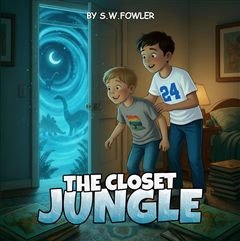
Samantha Wiley Fowler (S.W. Fowler) is a mom, storyteller and the children's author of The Closet Jungle, a dinosaur adventure that began as bedtime stories for her own kids. Her tales kept them begging for "just one more chapter," and now she helps parents and teachers raise kids who love to read. Find The Closet Jungle on Amazon and Barnes & Noble.
Related posts
How to Help a Reluctant Reader Fall in Love With Books
A child who resists reading has not given up on stories. Here are six patient ways to make books feel inviting again.
Read more about How to Help a Reluctant Reader Fall in Love With Books
How to Choose the Right Books for Your Child’s Age and Reading Level
Age, reading level and interests all matter. Here is how to find the books your child will actually want to keep reading.
Read more about How to Choose the Right Books for Your Child’s Age and Reading Level
How Long Should a 7-Year-Old Read Each Day?
There is no magic number, but there is a sensible range. Learn how much reading suits a 7-year-old, what counts, and how to build the habit.
Read more about How Long Should a 7-Year-Old Read Each Day?