From a Simple Idea to a Magical Adventure: How Children’s Stories Come to Life
Almost every great adventure begins with a question.
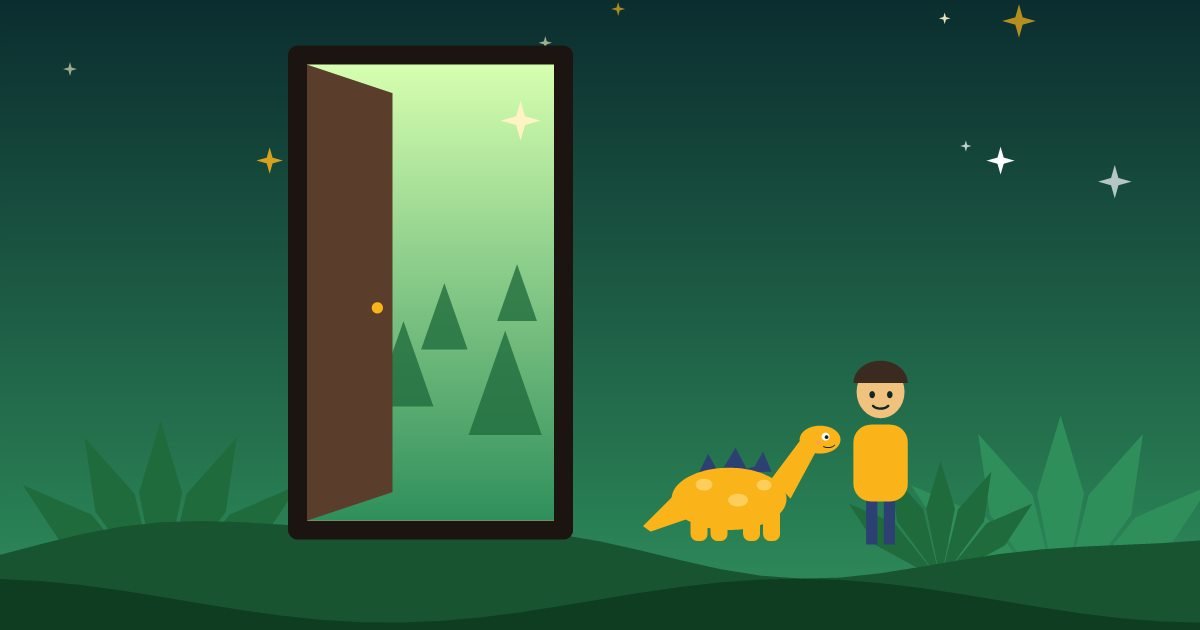
What if there were a secret door in your bedroom? What if the tree outside your window could talk? What if an ordinary afternoon turned into an extraordinary journey to a place nobody had ever seen before?
Children are particularly good at asking these questions. Give them an empty cardboard box, and it might become a spaceship. Give them a blanket, and suddenly you have a castle. Leave them alone with a few dinosaur toys, and you may discover that an entire prehistoric civilization has been established in the living room. Their imaginations have a wonderful way of turning the ordinary into something extraordinary.
For anyone who writes children's stories, that ability to see possibilities where others see everyday objects is a beautiful place to begin. A story does not always start with a carefully planned plot, a collection of character profiles, or a notebook filled with clever ideas. Sometimes, it begins with a small observation, a passing thought, or a question that refuses to go away.
But how does that little spark become a story a child wants to read? How do imaginary characters become believable, ordinary settings become magical worlds, and a handful of ideas turn into an adventure with a beginning, a middle, and an ending?
The process is part creativity, part patience, and occasionally a little bit of delightful chaos.
1. Every Story Begins With a Spark of Curiosity
Writers are often asked where their ideas come from. The honest answer is that inspiration can arrive from almost anywhere.
It might come from a childhood memory, an interesting conversation, a familiar place, a question about the natural world, or an imaginary situation that suddenly seems too interesting to ignore. For children's authors, everyday experiences can be especially rich sources of inspiration because children themselves are so good at noticing things adults overlook.
A child might wonder where the moon goes during the day. They might imagine that a wardrobe leads to another world or that the family cat has a secret life after everyone goes to sleep. These ideas may sound simple, but they contain the beginnings of something wonderful: a possibility that invites further exploration. The trick is not to dismiss an idea simply because it seems small.
Consider the premise of The Closet Jungle. A closet is an ordinary object found in countless homes. Children open closets to find clothes, toys, and things they have forgotten about. But what if opening one revealed something completely unexpected?
Sometimes, the smallest question leads to the biggest adventure.
2. Create Characters Children Want to Spend Time With
Once an idea begins to take shape, the next question is often: who is going to experience it?
A fascinating setting can capture a child's attention, but characters give readers someone to follow through that setting. They provide the emotional connection that makes a story feel meaningful. Children do not necessarily need characters who are perfect, exceptionally brave, or always certain of what to do. In fact, characters who make mistakes, become frightened, disagree with others, or struggle to solve a problem can be far more relatable. What matters is that readers have a reason to care about what happens to them.
When developing a character, start with a few simple questions.
What does this character enjoy? What makes them curious? What are they afraid of? What do they want? And what might they need to learn before the story ends? You do not have to answer every question before writing the first page. Sometimes, a character becomes clearer as the story develops. In The Closet Jungle, Reid and Josh are brothers who discover a prehistoric world together. Their relationship provides an additional dimension to the adventure because they are not simply exploring an unfamiliar environment; they are doing so alongside someone with whom they share a personal connection.
That relationship offers possibilities for teamwork, disagreement, and mutual support.
When children recognize aspects of themselves in fictional characters, the story can feel more immediate. They may understand a character's excitement, sympathize with their worries, or wonder whether they would make the same decisions.
And that is when a character begins to feel like more than a name on a page.
3. Build a World That Feels Real, Even When It Is Magical
One of the wonderful things about children's fiction is that almost anything can happen.
Animals can talk. Objects can have secret powers. A doorway can lead to another time or place. Entire worlds can exist beyond the boundaries of everyday experience. But even the most fantastical story benefits from details that help readers understand where they are. Imagine entering a prehistoric jungle. What would the landscape look like? Would there be enormous plants, unfamiliar sounds, muddy paths, or rivers winding through the trees? What might the characters notice first?
These details help readers picture the setting and imagine themselves alongside the characters. You do not need to describe everything at once. In fact, too much description can slow an adventure down. Choose details that help establish the atmosphere or matter to what happens next. A strange footprint might introduce a mystery. A narrow path might create a challenge. A distant roar might make the characters wonder whether they should continue exploring.
The setting becomes more interesting when it interacts with the story. A magical setting becomes convincing not because it could exist in real life, but because the reader understands how it works within the story.
4. Give Your Characters a Problem to Solve
An interesting idea and a memorable character are excellent beginnings, but a story needs movement.
Something has to happen.
Perhaps the characters discover something mysterious. Perhaps they want to reach a destination, find a missing object, overcome a challenge, or understand something they have never encountered before. The problem gives the story direction. It creates a reason for readers to keep turning the pages. Think about the difference between describing a beautiful jungle and following two characters who must find their way through it. The first provides a setting. The second creates a question: will they succeed, and how will they manage it?
A useful way to develop a plot is to ask three questions:
- What does the character want? Give them a clear goal, even if it is a small one.
- What makes the goal difficult? Introduce an obstacle that requires the character to think, act, or make a decision.
- What happens because of their choices? Let those decisions influence the next part of the story.
The obstacle does not always have to involve danger. It might be a misunderstanding, an unexpected discovery, a disagreement between friends, or a problem that requires creativity.
For younger readers, clear goals and manageable challenges can make a story easier to follow. Older children may enjoy more complicated mysteries, several connected problems, or twists that change their understanding of events.
The important thing is to give the adventure a sense of purpose. When readers want to know whether a character will overcome a challenge, they have a reason to remain emotionally invested in the story. And if the character's first plan fails? Even better. That creates an opportunity for the adventure to become more interesting.
5. Use Dialogue to Bring Characters to Life
A story is not only about what happens. It is also about how characters react to what happens. Dialogue allows readers to hear those reactions directly. It can reveal personality, communicate information, create humor, and show how relationships change throughout the story.
Consider two characters encountering a mysterious footprint.
One might immediately suggest following it. Another might point out that they have no idea what made it and perhaps should investigate before wandering into the unknown. The conversation tells us something about both characters without requiring a long explanation of their personalities. Good dialogue often sounds natural, but writing natural-sounding dialogue takes practice. Real conversations include plenty of repetition, interruptions, and irrelevant details that do not necessarily belong in a story.
The aim is to capture the character's voice while keeping the conversation purposeful.
Ask yourself what each character wants from the exchange. Are they trying to persuade someone, ask for help, hide their worries, or make a joke to ease the tension? Their words should reflect the situation and their personalities. For younger readers, dialogue can also make a story feel more immediate. It breaks up descriptive passages and allows characters to communicate directly with the audience through their actions and words.
And do not underestimate humor. A well-timed joke or a playful disagreement can make characters feel more relatable and give readers a moment to relax between tense scenes. When dialogue feels right, readers begin to imagine the characters speaking even after they have closed the book.
6. Give the Adventure Meaning Without Turning It Into a Lecture
Many children's stories explore important ideas: courage, kindness, curiosity, responsibility, friendship, or the value of working together. These themes can give a story emotional depth, but there is a difference between allowing a lesson to emerge naturally and stopping the adventure to explain exactly what the reader should learn.
Children generally do not need every message spelled out for them.
Instead, show characters facing situations that require decisions. Let them experience the consequences of those decisions. Allow them to make mistakes, reconsider their choices, and discover new ways of approaching a problem. These experiences allow the theme to grow out of the plot.
In The Closet Jungle, Reid and Josh's adventure provides opportunities to explore the relationship between brothers alongside the excitement of a prehistoric setting. Their journey can invite readers to think about how people respond to challenges, how different strengths can complement one another, and what it means to navigate unfamiliar situations together. The adventure remains the center of the experience. The ideas beneath it make the story more meaningful. A useful question for writers is this: what might readers feel, wonder about, or discuss after the story ends?
7. Remember That the Magic Often Begins With a Human Connection
When we think about children's stories, we often focus on the extraordinary elements: magical places, unusual creatures, daring journeys, and unexpected discoveries.
Those elements matter, but they are rarely the only reason a story stays with us.
We remember the characters we cared about. We remember moments that made us laugh, scenes that surprised us, and relationships that felt familiar. We remember how a story made us feel. That emotional connection is what transforms an interesting idea into an experience a reader wants to revisit. For writers, this means looking beyond the question of what happens next and considering why it matters to the characters.
If a character is frightened, what are they afraid of losing? If two characters disagree, what makes the disagreement important to them? If someone succeeds, what have they learned or overcome along the way?
These details help readers understand the emotional stakes of an adventure.
They also make stories easier to connect with across different ages and experiences. A child may be fascinated by the dinosaurs in a story, while a parent notices the relationship between the characters. Another reader may be drawn to the mystery or the imaginative setting. A good story can offer several points of connection without losing its central identity. That is one of the things I find most rewarding about writing for children. You are creating world they can explore, but you are also giving them characters, questions, and experiences that may stay with them long after the adventure ends.
And sometimes, the most meaningful response is simply hearing a child ask whether there will be another story.
Every Great Adventure Starts Somewhere
A magical children's story does not have to begin with an elaborate plot or a perfectly formed idea. It can start with a question, a familiar object, an interesting character, or an imaginative possibility that seems too good to ignore.
From there, the writer builds a world, creates characters worth following, introduces challenges, and discovers how the pieces fit together. Research adds depth. Dialogue gives characters a voice. Revision helps the story become clearer and more engaging.
The process takes time, and it rarely unfolds in a perfectly straight line. Some ideas grow into entire adventures. Others lead somewhere unexpected. A scene that seems difficult to write today may become the heart of the story tomorrow.
That is part of the pleasure of creating children's literature.
The journey behind The Closet Jungle reflects the appeal of a simple imaginative possibility: what if an ordinary closet opened into an extraordinary prehistoric world? Through Reid and Josh's adventure, that idea becomes an opportunity to explore discovery, uncertainty, and the relationship between two brothers.
It is a reminder that imagination can transform familiar places into settings for extraordinary experiences.
And you do not have to be a published author to begin exploring that possibility yourself.
If you are a parent, try inventing a short bedtime adventure with your child. Let them choose the main character, suggest the problem, or decide what happens next. If you are an aspiring writer, keep a notebook of questions and unusual ideas. Start with one character and one challenge, and see where the story leads.
Do not worry about creating something perfect on the first attempt.
Give the idea room to grow.
After all, the next wonderful children's story might begin with a question you hear at the dinner table, a drawing your child brings home from school, or a simple thought that appears while you are putting away the laundry.
You never know what might be waiting behind an ordinary door.
Ready to step into an imaginative world? Discover The Closet Jungle by S.W. Fowler, where brothers Reid and Josh find themselves on a prehistoric adventure filled with dinosaurs, discoveries, and unexpected challenges. Open the book and see how one imaginative idea can lead to a world of possibilities.
Keep reading: How to write the best children’s book anyone’s ever read · Common mistakes in children’s book writing · Behind the Book
Frequently asked questions
Where do children’s story ideas come from?
From almost anywhere: a childhood memory, a familiar place, a question about the natural world or an imaginary situation that will not go away. Small, ordinary ideas often make the best starting points.
What makes a children’s story work?
A spark of curiosity, characters readers care about, a world with convincing details, a problem to solve, natural dialogue, and a meaning that grows out of the plot rather than a lecture.
Can I invent a story with my child?
Yes. Let your child choose the main character, suggest the problem or decide what happens next. Start with one character and one challenge, and see where the story leads.

S.W. Fowler
Samantha Wiley Fowler (S.W. Fowler) is a mom, storyteller and the children's author of The Closet Jungle, a dinosaur adventure that began as bedtime stories for her own kids. Her tales kept them begging for "just one more chapter," and now she helps parents and teachers raise kids who love to read. Find The Closet Jungle on Amazon and Barnes & Noble.
Related posts

10 Best Children’s Book Publishers for Aspiring Authors in 2026
From self-publishing platforms to the big traditional houses, here are ten publishing routes for people who want to put a children’s book i…
Read more about 10 Best Children’s Book Publishers for Aspiring Authors in 2026
Common Mistakes in Children’s Book Writing
The mistakes that sink a children’s book rarely have anything to do with commas. They are about story, and these eight come up again and ag…
Read more about Common Mistakes in Children’s Book Writing
How To Write The Best Children’s Book Anyone’s Ever Read
Simple but effective strategies for writers who want to create meaningful, memorable and magical stories for young readers.
Read more about How To Write The Best Children’s Book Anyone’s Ever Read